Introduction
If you talk to anyone in Kerala who has actually installed solar, the conversation quickly stops being about “saving the environment” and becomes about one thing: power cuts and reliability.
Not the dramatic kind. The annoying kind. Voltage drops at night, sudden shutdowns during rain, or that one phase going out while the rest of the house sits half-dead.
That’s exactly why a proper battery setup matters. Solar panels alone don’t solve the problem. In fact, a lot of people realize this too late.
One homeowner from Kerala put it bluntly “On-grid systems are basically useless if power goes.”
That’s the reality. And it’s why choosing the right setup, especially from reliable Solar battery manufacturers in Kerala, makes or breaks your system.
What People Expect vs What Actually Happens
Expectation:
Install solar → zero bills → no power issues
Reality:
- Solar works great during the day
- But if KSEB cuts power, many systems just shut down
- Night usage depends entirely on your battery
Even in cities like Kochi, hybrid setups are recommended specifically because outages still happen often enough to matter
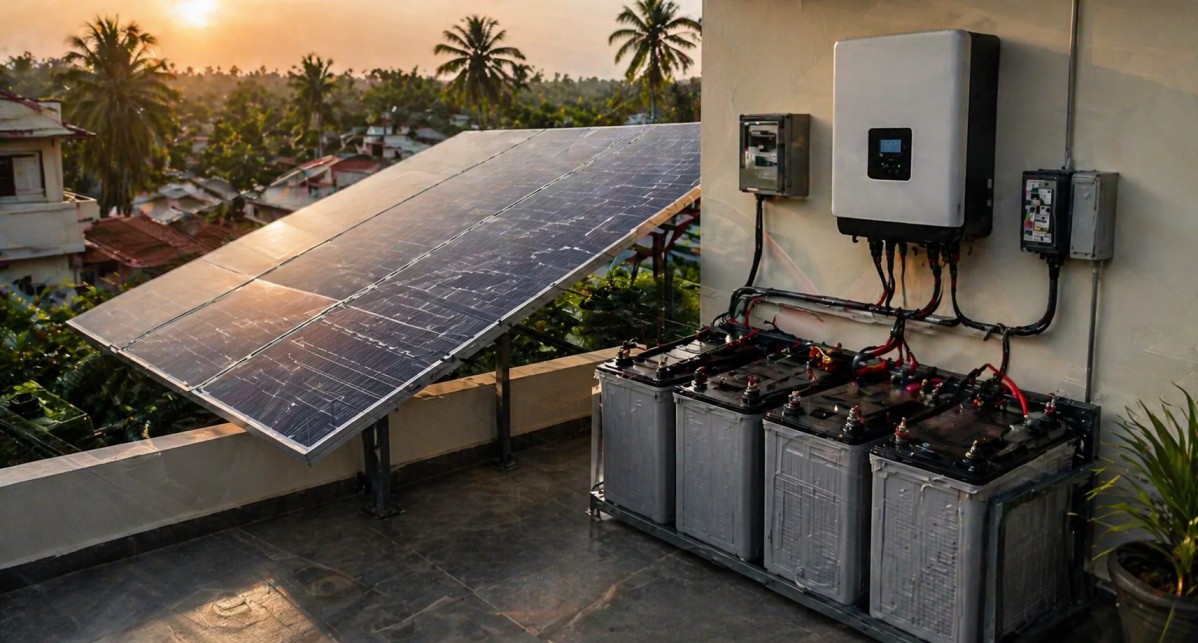
What a Proper Solar Battery Setup Actually Looks Like
At a basic level, nothing fancy:
- Solar panels
- Inverter (preferably hybrid)
- Battery bank
- Charge controller
But the difference between a “works okay” system and a “you forget outages exist” system is how these are sized and matched.
A typical off-grid or hybrid system in Kerala stores energy in batteries during the day and uses it at night or during outages
Simple in theory. Messy in execution if done wrong.
Real Setup Examples
Case 1: Small Home in Malappuram
- 2 panels + 2 batteries
- Runs lights, fans, router, small motor
- Cuts 45–65 units monthly
- Owner said he “doesn’t even notice outages anymore”
This is what a correctly sized system feels like.
Case 2: Mid-Range House
- Installs 3kW solar
- Keeps old inverter + 1 battery
Result:
- Daytime = great
- Night = disappointment
- Backup barely lasts
This is the most common mistake: overspending on panels, underspending on batteries
Case 3: Reddit User Setup
- 4kVA inverter + 4 batteries
- Extra cost ~₹1 lakh
- Battery life ~5 years
- ROI slower than expected
Not perfect, but practical. This setup actually handles outages properly.
Battery Types
Lead-Acid (Budget Friendly)
People pick this when budget is tight. Then regret maintenance later.
- Water topping
- Performance drops in 2–3 years
- Still common in smaller homes
Tubular Batteries (Most Common in Kerala)
This is the “safe choice.”
- Handles frequent power cuts well
- Lasts ~5–7 years in real use
- Works decently in heat and humidity
Lithium-Ion (What People Upgrade To)
Usually after one bad experience with lead-acid.
- No maintenance
- Faster charging
- Lasts 8–12 years
But yeah, they are expensive upfront. That’s the trade-off.
What Actually Works Best in Kerala
If your area has stable power
→ Go hybrid, small battery
→ Don’t overspend
If you get regular outages
→ Bigger battery bank is non-negotiable
→ Hybrid inverter + at least 2–4 batteries
If you want full independence
→ Off-grid + lithium
→ Expensive, but closest to “no KSEB dependency”
The Part Most People Or Dealers Don’t Tell You
1. Battery matters more than panels
People obsess over wattage.
Reality: your night comfort depends on storage, not generation.
2. ROI is not always pretty
Vendors promise 3–5 years.
Actual users say it can take longer depending on usage and tariffs
3. Grid issues are real
Some areas in Kerala are already facing transformer limits for solar connections
That means:
- You might not always rely on exporting power
- Storage (battery) becomes even more important
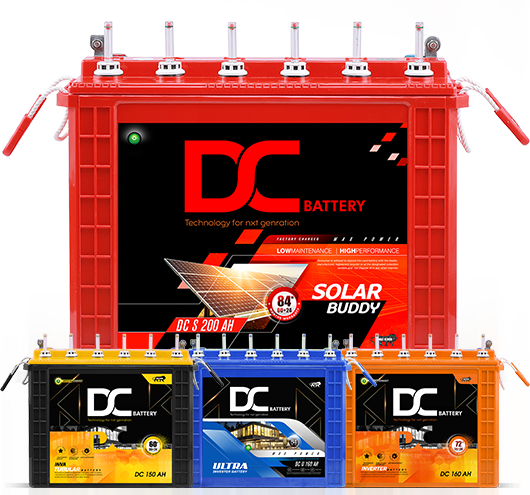
Where DC Batteries Fits In
This is where local solar battery manufacturers matter.
Generic batteries struggle in Kerala because of:
- humidity
- temperature swings
- frequent charge/discharge cycles
DC Batteries focuses on:
- durability in coastal conditions
- stable performance under inconsistent power
- setups that actually match local usage patterns
And honestly, local support matters more than specs on paper.
Common Mistakes To Avoid
- Installing solar without enough battery
- Choosing cheapest battery option
- Ignoring ventilation (heat kills batteries faster than you think)
- Not planning for load increase (AC, motor, etc.)
Conclusion
The best solar battery setup for homes in Kerala is not the biggest system or the most expensive one. It is the one that matches how your house actually uses power.
If your goal is:
- lower bills → solar panels matter
- uninterrupted life → batteries matter more
And if you get the battery wrong, the whole system feels like a waste.
That’s why working with experienced Solar battery manufacturers in Kerala like DC Batteries isn’t just a branding line. It’s what decides whether your system feels like an upgrade or a constant compromise.